
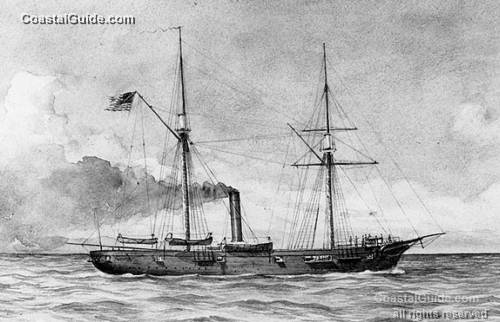
USS Huron, a 691-ton Unadilla class screw steam gunboat, was built at Boston, Massachusetts. Commissioned in January 1862, she operated off South Carolina, Georgia and Florida for the next two years, participating in the capture or destruction of three blockade-running steamers and four sailing vessels. Huron also took part in the several operations against Confederate shore positions, among them bombardments of Fort McAllister, Georgia, and batteries in the Stono River, S.C.
Transferred to the North Atlantic Blockading Squadron in 1864, Huron bombarded Fort Fisher, North Carolina, during both the unsuccessful attempt to capture that strong point in December 1864 and the successful one the next month. She subsequently participated in operations on the Cape Fear River, N.C. In May 1865, Huron steamed to the Gulf of Mexico to help with efforts to intercept escaping Confederate officials.
Following the end of the Civil War, Huron served on the South American station. She decommissioned in October 1868 and was sold in June 1869. She subsequently became the merchant vessel D.H. Bills.
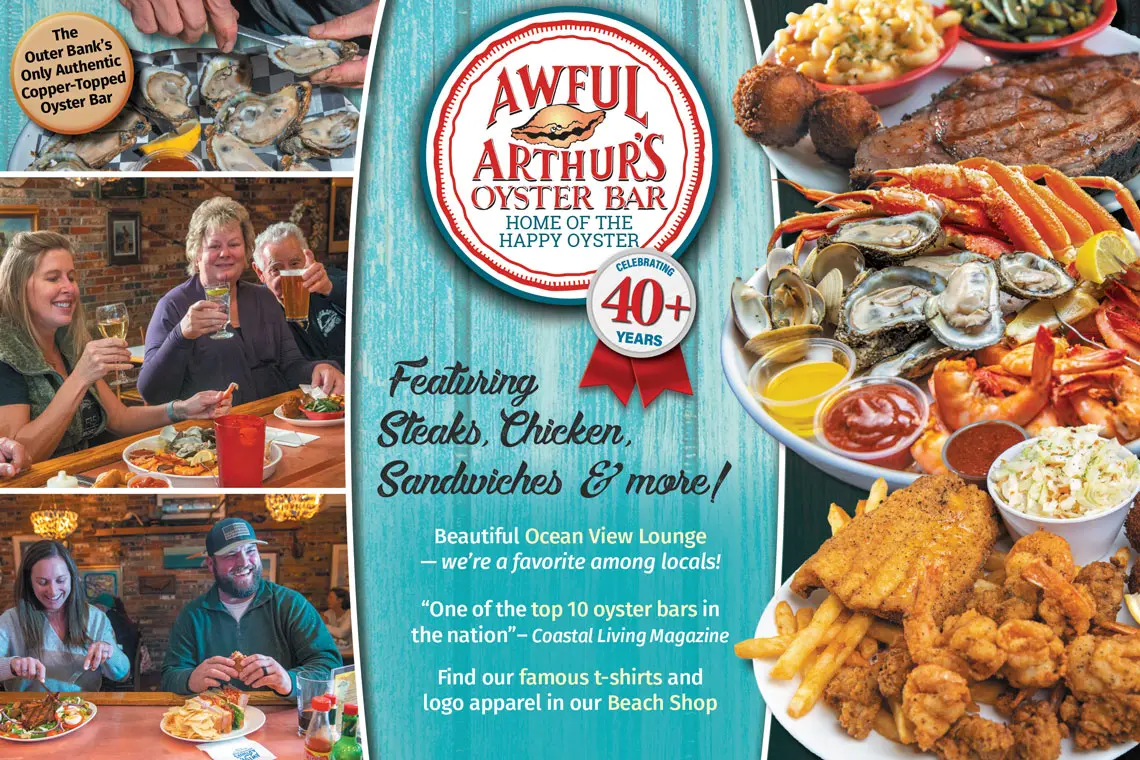
Welcome to the home of the happy oyster where for over 40 years the oyster has been our world. The Outer Banks only authentic oyster bar is the place to enjoy sensational fare from the sea washed down with your favorite brew or cocktail. We serve by...

Join Captain Stuart Wescott aboard The Captain Johnny boat for a Guaranteed Dolphin Watch cruise in protected waters off the Outer Banks, NC. This two hour cruise is ideal for all ages. Enjoy breathtaking views as you listen to a...
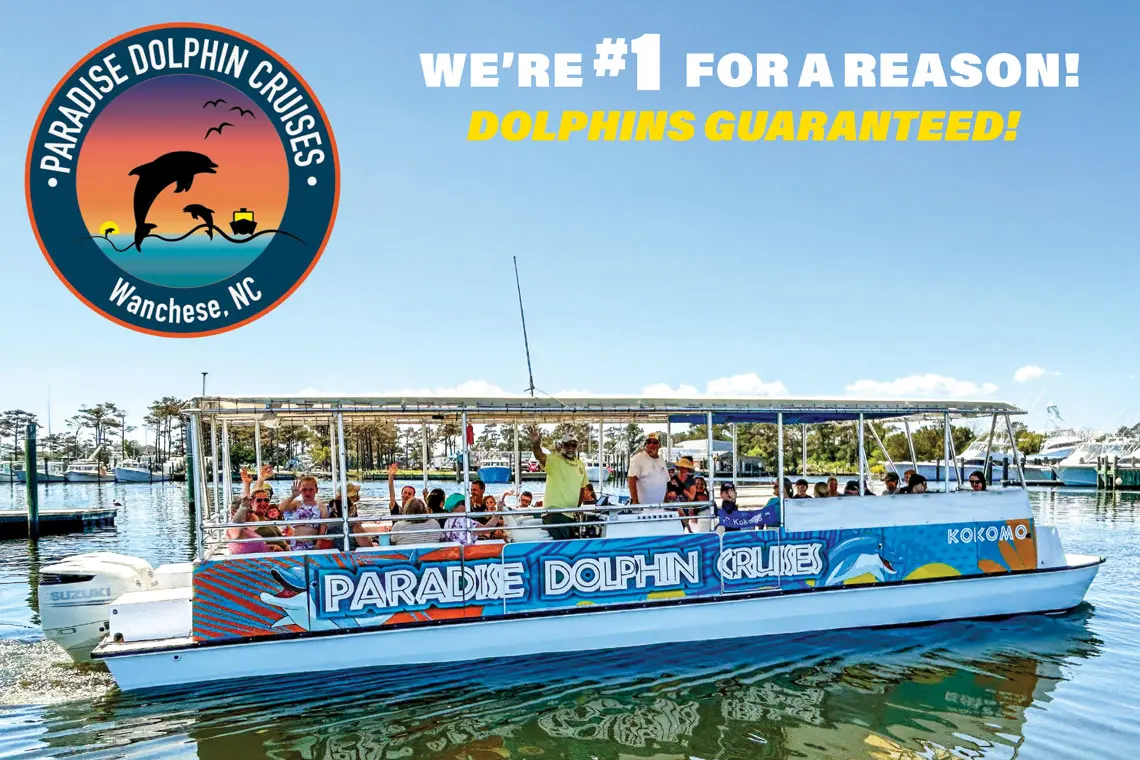
With the best views around and the quickest access to dolphins, Paradise Dolphin Cruises is committed to offering you one of the most amazing experiences of your life! Climb aboard the Kokomo, our 34-passenger catarmaran and the area’s newest...
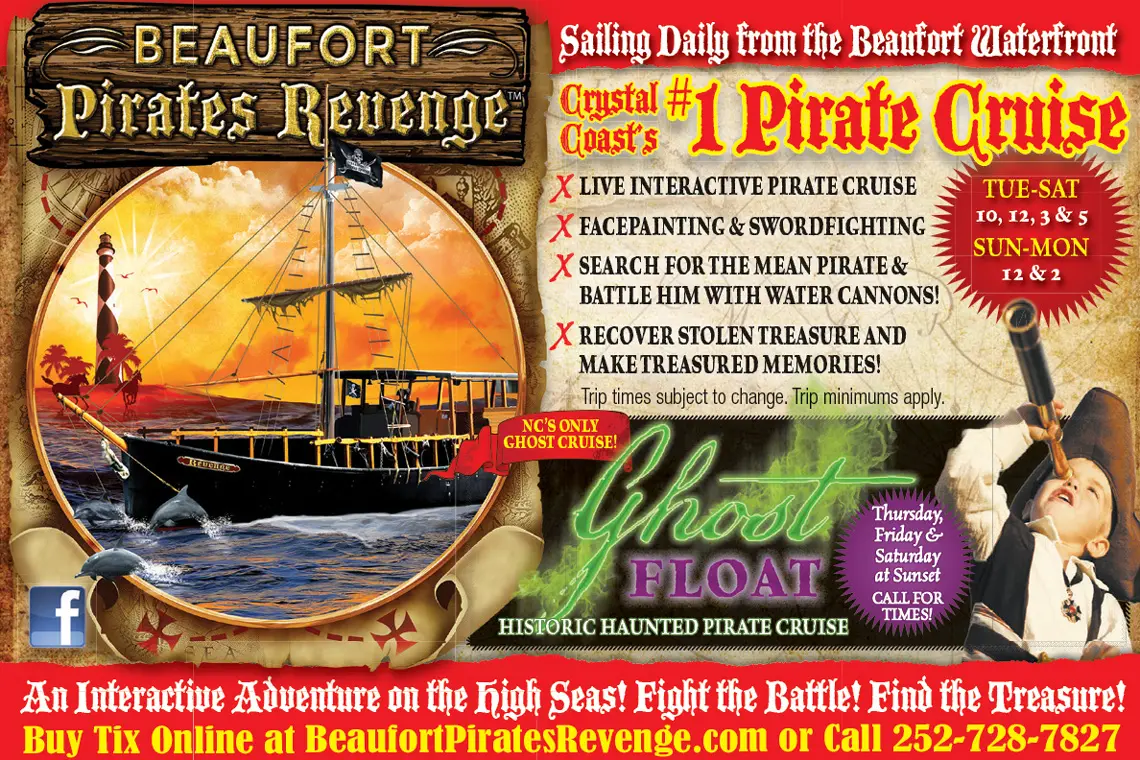
Jump aboard the pirate ship "REVENGE" at 600 Front Street in Beaufort, North Carolina. Our interactive voyages offer fun and adventure for families and swashbucklers of all ages. Come join our crew, take part in a pirate adventure, and enjoy festive...