
Fourteen miles west of Wilmington, North Carolina lies the small railroad station of Maco.
One rainy night in the spring of 1867, the conductor, Joe Baldwin, of a train was tidying up the rear coach as it approached the homestretch into Wilmington. Holding his lantern in front of his body, he prepared to step forward into the next car when he realized there was no car ahead! Somehow his coach had come uncoupled from the rest of the train and was quickly losing speed.
Knowing another train was following close behind, he raced back through the car, pulled open the heavy door and began to swing his lantern back and forth, back and forth, as the huge, fiery eye of the approaching train grew larger and larger. The heavy fog and dark night thwarted his signaling attempts, and with a terrific impact, the two trains collided. In the collision, the conductor's head was severed from his body.
Over the years, especially on dark, rainy nights, reports of a strange light, swinging from side to side has been seen along the tracks as the Joe Baldwin still haunts the tracks, searching for his head.

Gray’s Outer Banks Lifestyle Clothing Company offers the absolute best in Outer Banks T-shirts and Sweatshirts including Champion, Under Armour with "Outer Banks” and Gear! We carry quality fashions and accessories for the whole family...

Free Your Toes!®Live, work and play with your toes exposed® and the freedom of flip flops on your feet.

For those traveling to the Outer Banks, The Cotton Gin is a beloved landmark with its large windmill and picturesque gardens. The Cotton Gin has stood in the same location since 1929, starting as a working cotton gin and growing to a gift store with...
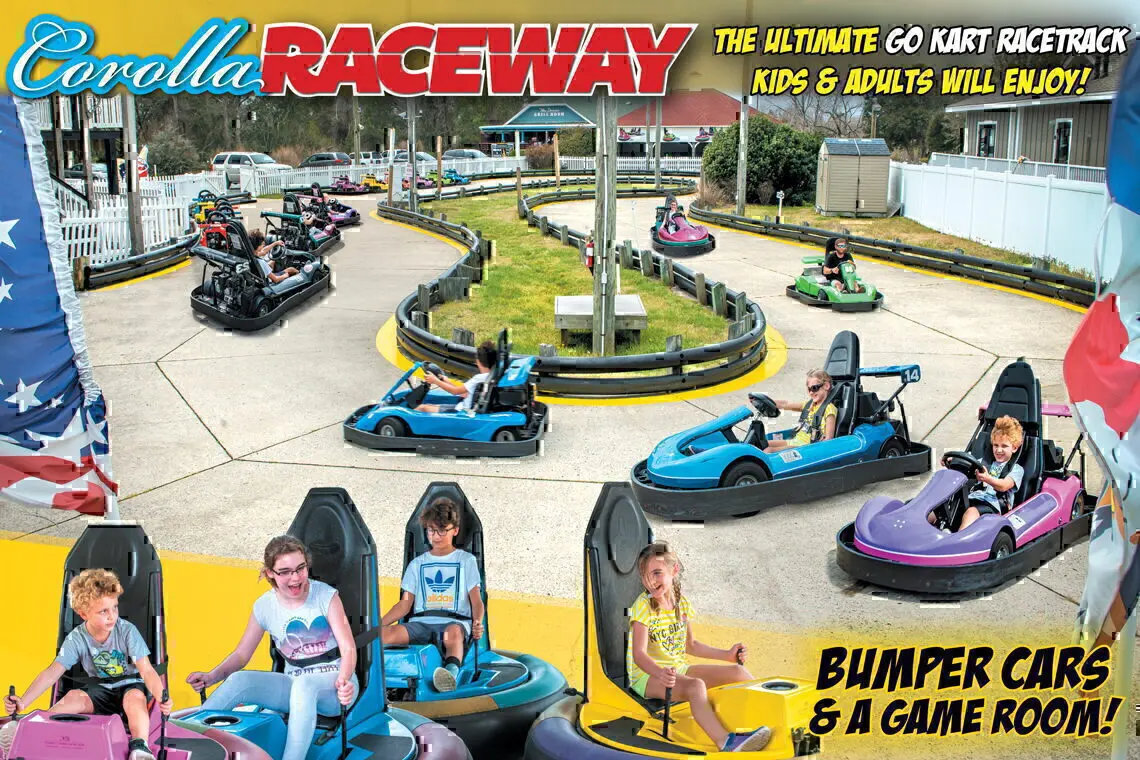
The Ultimate Go Kart Racetrack That Kids and Adults will Enjoy! Corolla Raceway is the premier Go-Kart experience. Our upscale facility is designed to provide a first class entertainment experience. Corolla Raceway provides the newest Single...